
Introducing Learning Lounge: New Tutoring for Pre-K to 5th Grade
A little extra support can change the way a child feels about learning. One clear explanation, one patient practice round, or one moment of “I get it now” can turn frustration into confidence.
That is the heart behind Learning Lounge, our new tutoring service for students from Pre-K through 5th grade. Starting today, Learning Lounge gives young learners a welcoming place to build skills, ask questions, and grow at a pace that fits their needs.
For many children, early learning years shape how they see school. Reading, writing, math, focus, and problem-solving all build on each other. When a student misses a step, the next lesson can feel harder than it needs to be. Learning Lounge is designed to help students strengthen those foundations before small gaps become bigger ones.

Learning Lounge starts today
Learning Lounge officially begins today for students in Pre-K through 5th grade. The program gives children extra academic support in a setting that feels encouraging, not stressful.
The goal is simple: help students feel more capable in the skills they use every day at school.
That may include:
Early literacy and letter recognition
Phonics and reading fluency
Reading comprehension
Handwriting and early writing skills
Sentence building and paragraph writing
Number sense and counting
Addition, subtraction, multiplication, and division
Math word problems
Homework help
Study habits and school readiness skills
Every child comes with a different mix of strengths and needs. Some students need help catching up in a subject. Others need more practice to feel steady. Some are ready for added challenge. Learning Lounge meets students where they are and helps them take the next clear step.
Why tutoring matters in the early grades
Pre-K through 5th grade is a time of major growth. Children learn how to listen, follow routines, sound out words, explain ideas, count, solve problems, and work through mistakes.
Those skills do not appear all at once. They grow through practice.
A child who struggles with letter sounds may later find reading harder. A student who feels unsure about number sense may feel stuck when math moves into word problems. A child who has trouble organizing thoughts may avoid writing.
Tutoring can help because it gives students something classroom time cannot always provide: focused attention.
In a tutoring setting, a child can slow down. They can ask the same question twice. They can practice a skill in more than one way. They can make mistakes without feeling rushed.
That kind of support is especially useful for young learners, because confidence and skill often grow together. When a child feels safe trying, they practice more. When they practice more, they improve. When they improve, they begin to believe they can do hard things.

What students can expect
Learning Lounge is built to feel approachable. Students should not feel like they are walking into another test. They should feel like they are entering a space where learning is broken into small, doable steps.
A typical tutoring experience may include a mix of review, guided practice, games, reading time, writing time, math activities, and homework support. For younger students, that may look like hands-on learning with letters, sounds, pictures, counters, and movement. For older elementary students, it may include reading passages, math practice, planning tools, and step-by-step problem solving.
The focus stays on progress, not pressure.
Students may work on skills like:
Reading readiness
Pre-K and kindergarten students often need help recognizing letters, hearing sounds, rhyming, and building vocabulary.
Reading growth
Early readers may practice sounding out words, reading smoothly, and understanding what they read.
Math confidence
Students can use visual tools, number lines, objects, and examples to make math feel less abstract.
Writing development
Children may work on forming letters, writing complete sentences, adding details, or organizing ideas.
Homework support
Tutoring can help students understand assignments instead of simply rushing through them.
The best tutoring does more than help with one worksheet. It teaches children how to think through the next one.
How Learning Lounge supports different ages
A Pre-K student and a 5th grader need very different kinds of support. Learning Lounge keeps those developmental differences in mind.
For Pre-K and kindergarten, learning often works best when it feels playful and hands-on. Students may practice letters, sounds, counting, patterns, pencil grip, fine motor skills, and classroom routines. Short activities, encouragement, and repetition matter.
For 1st and 2nd grade, students are often building core reading and math skills. Tutoring may focus on phonics, sight words, reading fluency, basic addition and subtraction, and writing simple sentences.
For 3rd through 5th grade, students begin using foundational skills in more complex ways. They may need help with comprehension, multi-step math problems, multiplication facts, division, fractions, spelling, grammar, paragraph writing, or study habits.
At every age, the purpose stays the same: give students support that fits their stage of learning.
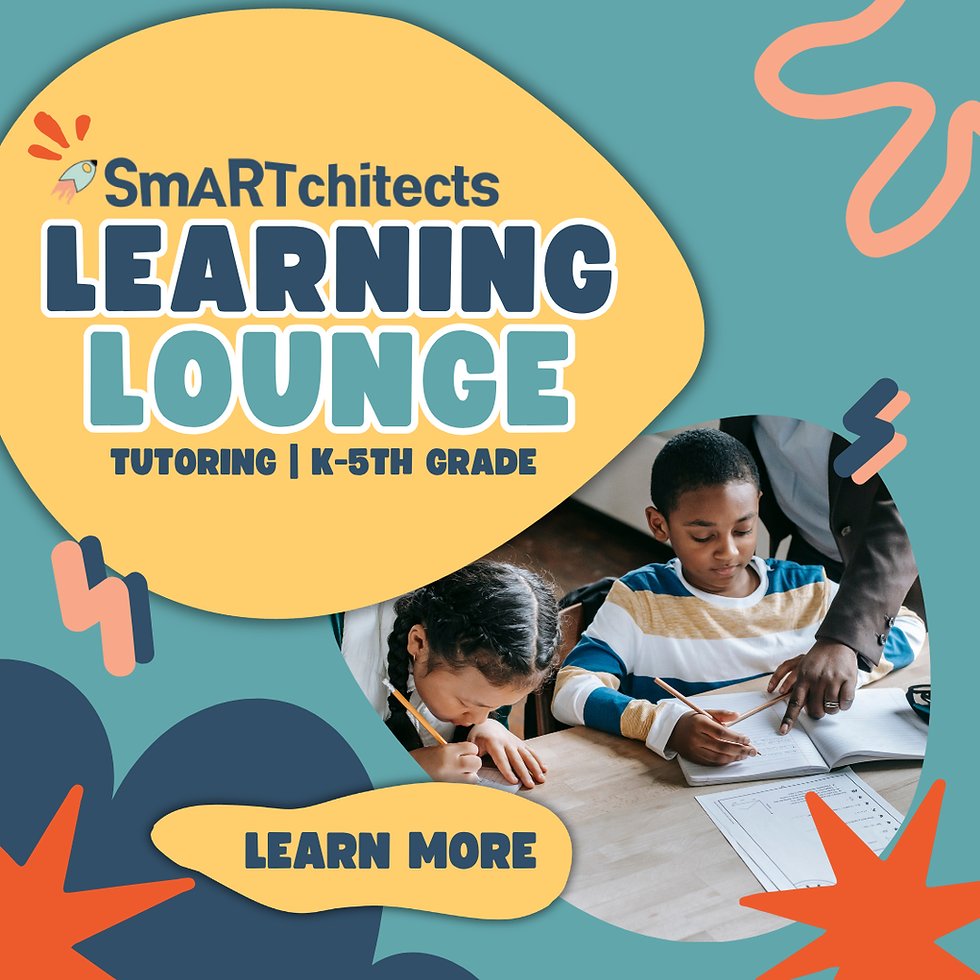
Many students understand more than they can show right away. They may freeze when called on, feel embarrassed by mistakes, or rush because they want to be done.
Learning Lounge gives students a place to slow down and speak up. Questions are welcome. Mistakes are part of the work. The tone is patient and encouraging.
That matters because young learners often carry feelings about school into every subject. A child who says “I’m bad at math” may stop trying before the problem even begins. A child who thinks reading is “too hard” may avoid books that could help them grow.
With the right support, those beliefs can soften.
A tutor can say, “Let’s try it another way.” A student can try again. That small moment can build trust, and trust makes learning easier.
What families can look forward to
Families often know when a child needs extra help, but it can be hard to know where to begin. Learning Lounge offers a clear starting point.
The service can support students who:
Need help with reading or math basics
Feel frustrated during homework
Avoid writing or reading tasks
Need more practice than class time allows
Are preparing for the next grade level
Benefit from patient, one-on-one or small-group support
Need a steady routine for academic growth
The biggest benefit may be what families notice outside the tutoring session. A child may become more willing to read aloud. Math homework may take less time. Writing may feel less overwhelming. School may start to feel more manageable.
Progress can look different for every child, but the signs are often simple: less stress, more effort, and more confidence.
Learning begins with the first step
Learning Lounge starts today, and it is ready to welcome students from Pre-K through 5th grade.
Whether a child needs help catching up, staying on track, or growing stronger in key skills, extra support can make learning feel more possible. The early grades are full of big moments, from recognizing a first letter sound to solving a tricky math problem. With patient guidance, students can build the tools they need one step at a time.
Learning Lounge is here to help young learners feel supported, capable, and ready for what comes next.